
Fife Council Planning Objection Success
Description
Outdoor Seating Area for Cafe. Refused – Fife Council (November 2024)
Location
Outcome
Planning Application Refused
Introduction
Outdoor seating areas can make a positive contribution to town and neighbourhood centres, supporting local businesses and helping create active and attractive places. However, where seating is proposed within an existing pedestrian route or area of public realm, careful consideration must be given to accessibility, pedestrian movement, safety, amenity and the overall quality of the place.
This case study explains how Planning Objections Scotland assisted in challenging an application for the change of use of an existing footpath to form an outdoor seating area within the Fife Council area.
The proposal raised important questions about the balance between supporting commercial activity and maintaining safe, inclusive and accessible public spaces. Following consideration of the application, Fife Council refused planning permission on 26 November 2024.
To protect client confidentiality, identifying details have been removed. However, the planning issues, methodology and outcome accurately reflect the work undertaken.
The Proposal
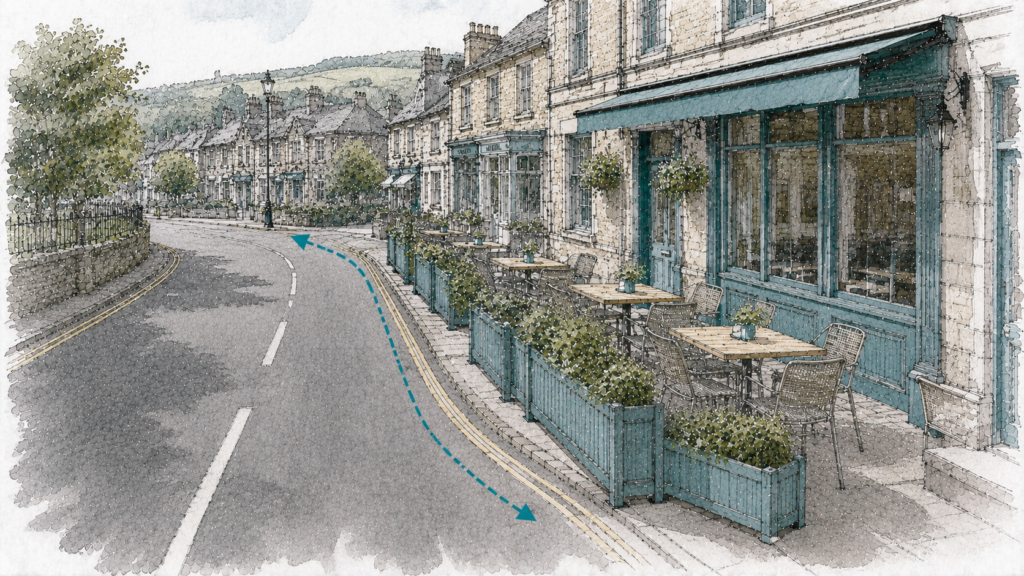
The application sought planning permission for the change of use of an existing footpath to create an outdoor seating area.
While outdoor seating can enhance the vitality of commercial areas in appropriate locations, the proposed use would affect an established pedestrian route. The application therefore required consideration beyond the operational benefits of providing additional seating.
In particular, questions arose regarding the effect upon pedestrian access and connectivity, the availability of sufficient space for safe movement, accessibility for different users and the proposal’s wider effect upon the character and function of the public realm.
The development therefore required careful assessment against National Planning Framework 4 (NPF4), relevant Fife development plan policies and other material planning considerations relating to accessibility, sustainable transport, amenity and placemaking.
Our client instructed Planning Objections Scotland to undertake an independent assessment of the application and determine whether the proposal represented an acceptable use of this part of the public realm.
Applying the P.O.S. Intervene Method
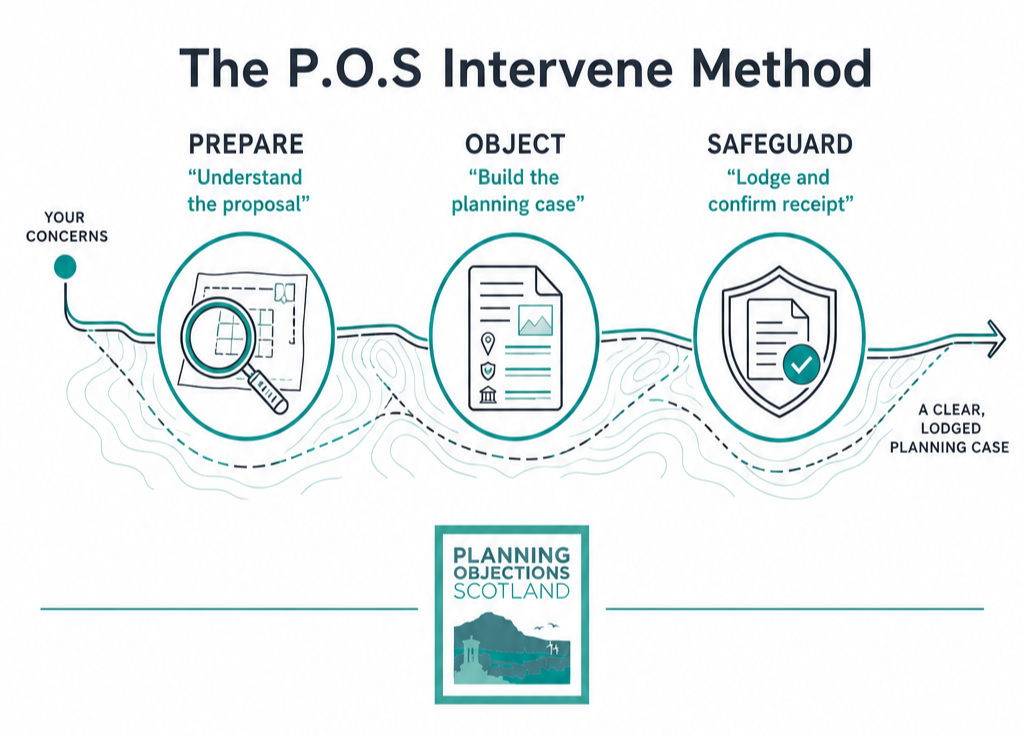
Every planning objection prepared by Planning Objections Scotland follows our P.O.S. Intervene Method—a structured process designed to ensure that every representation is evidence-led, policy-based and focused on material planning considerations rather than opinion.
Although every planning application raises different issues, our methodology provides a consistent framework for identifying the strongest planning arguments before they are presented to the planning authority.
Prepare
The commission began with a confidential discussion with our client to understand the proposal and identify the principal planning concerns.
Following agreement of the scope of work and fixed fee, we undertook a detailed review of the planning application, submitted information, site context and relevant national and local planning policies.
Particular attention was given to the existing function of the footpath, pedestrian movement, accessibility, the character of the surrounding public realm and whether sufficient justification had been provided for the proposed change of use.
The relationship between the development and the wider principles of sustainable and inclusive placemaking was also considered.
This initial assessment established the factual planning position before any conclusions were drawn.
Object
Having established the factual planning position, each concern was assessed against the statutory Development Plan and other relevant material planning considerations.
Rather than objecting to outdoor seating in principle, the representation focused on whether this particular location could accommodate the proposed use without unacceptable consequences for pedestrians and the wider public realm.
The objection considered the potential loss or restriction of pedestrian space, implications for accessibility and connectivity, pedestrian safety, public amenity and the character and appearance of the surrounding area.
These concerns were then considered against NPF4 and relevant local planning policies relating to sustainable transport, accessibility, placemaking and protection of public amenity.
Each issue was structured around recognised material planning considerations and supported by planning policy and professional planning judgement.
A draft report was provided to our client for review before being finalised and submitted.
Safeguard
Following client approval, the completed planning objection and supporting material were lodged with Fife Council.
Receipt was confirmed, ensuring that the representation formed part of the formal planning application record and could be considered by the planning authority during determination of the application.
As with every instruction, we remained available to consider amended plans or additional supporting information should the proposal change during the determination process.
The remainder of this case study explains how the P.O.S. Intervene Method was applied to this planning application.
Thorough Review of the Planning Application
Our review extended beyond the principle of providing an outdoor seating area.
The application was considered within its wider public realm context, including the existing function of the footpath and the potential consequences of introducing a commercial seating use into space used for pedestrian movement.
This included reviewing:
- the planning application and supporting information;
- the existing function and character of the footpath;
- pedestrian movement and connectivity;
- accessibility and inclusive access;
- potential pedestrian safety implications;
- public amenity;
- character and appearance of the surrounding area;
- design quality and placemaking;
- sustainable transport considerations;
- National Planning Framework 4;
- relevant Fife development plan policies; and
- other relevant material planning considerations.
Our assessment identified a number of concerns regarding whether the proposed change of use could be appropriately accommodated.
Particular attention was given to the potential reduction in space available for pedestrian movement and whether the development could adversely affect the accessibility and functionality of the existing route.
The assessment also considered whether the proposal represented an appropriate response to its public realm setting and whether sufficient justification or mitigation had been provided to address the consequences of changing the function of part of the footpath.
Collectively, these matters required careful assessment before the planning authority could conclude that the proposal represented an acceptable form of development.
Turning Concerns into Planning Arguments
One of the most important aspects of any planning objection is translating understandable concerns into planning arguments capable of influencing the planning process.
In this case, the objection extended beyond general concerns about tables and chairs occupying part of a footpath.
Instead, the potential effects of the development were considered against National Planning Framework 4, relevant Fife development plan policies and other material planning considerations.
The assessment considered the importance of maintaining safe and accessible pedestrian routes and whether the proposal could adversely affect connectivity, pedestrian movement and the ability of different users to navigate the public realm.
Particular attention was also given to the placemaking principles established through NPF4 and the six qualities of successful places. The objection considered whether changing the function of part of the footpath would contribute towards a healthy, pleasant, connected and sustainable place, or whether the resulting constraints upon pedestrian movement would undermine those objectives.
The potential effect upon the character and appearance of the public realm was also considered alongside the absence of sufficient justification or mitigation for the loss or restriction of existing pedestrian space.
Rather than presenting these matters as isolated concerns, the objection demonstrated how accessibility, pedestrian safety, public amenity, placemaking and sustainable transport collectively influenced the proposal’s compliance with the statutory Development Plan.
This evidence-led approach ensured that Fife Council received a structured planning representation founded upon planning policy and material planning considerations rather than personal opposition to the proposed commercial use.
The Outcome
Following consideration of the planning application and the representations received, Fife Council refused planning permission in November 2024.
While planning decisions always remain the responsibility of the planning authority, this case demonstrates the importance of professionally prepared planning objections founded upon planning policy, evidence and material planning considerations.
The objection identified concerns relating to pedestrian access, connectivity, accessibility, public amenity, placemaking and the appropriate use of the public realm.
Importantly, the case demonstrates that even relatively small-scale changes of use can raise significant planning considerations where they affect spaces used by the wider public.
The potential economic and placemaking benefits associated with outdoor seating must be balanced against the need to maintain safe, inclusive and functional pedestrian environments.
The refusal therefore provides another example of how a structured, policy-led planning objection can ensure that legitimate concerns are clearly articulated and properly considered as part of the planning decision-making process.
Could We Help You?
If you are concerned about a planning application affecting your property, neighbourhood or local community, Planning Objections Scotland can provide an independent assessment of the proposal and prepare a professionally researched planning objection on your behalf.
Using our proven P.O.S. Intervene Method, we assess every planning application against the relevant national and local planning policies, identify the strongest material planning considerations and prepare evidence-led representations designed to assist planning authorities in reaching informed planning decisions.
Whether your concerns relate to a change of use, outdoor seating area, commercial development, pedestrian access, public amenity or another form of development, we can help ensure your concerns are presented clearly, professionally and effectively.
If you are concerned about a planning application within Fife, contact Planning Objections Scotland to arrange a confidential review and discover how our professional planning objection service could help protect your interests.
 Confidential, no-obligation case review Reviewed by a professional planning consultant Know where you stand within 1 working day* Clear fixed fee before you decide to proceed Objection strategy based on planning policy — not emotion