
East Renfrewshire Council Planning Objection Success
Description
Significant House Extension Refused by East Renfrewshire Council
Location
Outcome
Planning Application Refused
Introduction
When neighbouring planning applications have the potential to affect your home or quality of life, it can be difficult to know whether your concerns carry weight within the planning system.
This case study examines how Planning Objections Scotland assisted a neighbouring resident by preparing a detailed planning objection to a proposal for a substantial extension within an established residential area of East Renfrewshire. Following consideration of the application, East Renfrewshire Council refused planning permission.
To protect client confidentiality, identifying details have been omitted. However, the planning issues, methodology and outcome accurately reflect the work undertaken.
The Proposal
The application sought planning permission for a significant extension to an existing dwelling within a well-established residential area.
Having reviewed the submitted proposals, the neighbouring resident was concerned that the scale and design of the extension would have an unacceptable impact upon the character of the area and the amenity enjoyed by adjoining properties.
The client approached Planning Objections Scotland to independently assess the planning application and determine whether those concerns could be supported by planning policy and other material planning considerations.

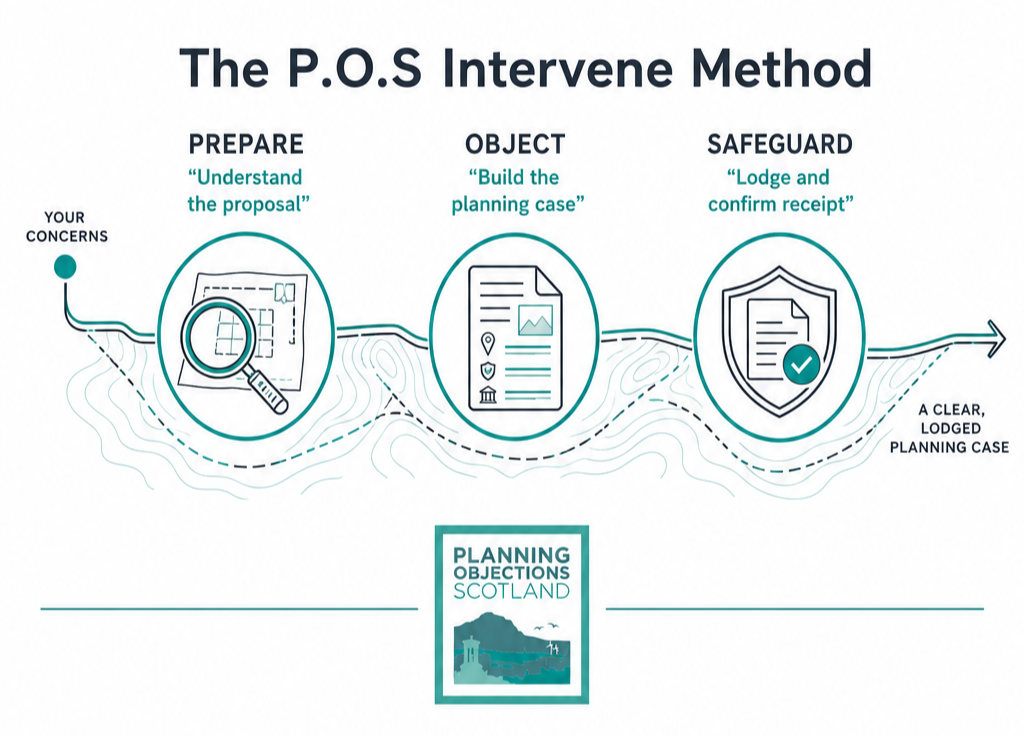
Applying the POS Intervene Method
Every planning objection prepared by Planning Objections Scotland follows our POS Intervene Method—a structured process developed to ensure that every objection is evidence-led, policy-based and focused on material planning considerations rather than opinion.
Although every planning application raises different issues, our methodology provides a consistent framework for identifying the strongest planning arguments before they are presented to the planning authority.
Prepare
The process began with a confidential, high-level review of the planning application and an initial discussion with the client to understand both the proposal and the concerns that had prompted them to seek professional advice.
Once the scope of the commission, fixed fee and programme had been agreed, we undertook a detailed review of the planning application. This included examining the submitted drawings, supporting documents, planning history, site context and the relevant national and local planning policy framework.
Supporting evidence was also gathered where necessary to establish a robust factual basis for the assessment before any planning arguments were developed.
Object
The next stage focused on identifying which concerns represented genuine material planning considerations.
Rather than simply repeating the client’s concerns, every issue was assessed against the statutory Development Plan and other relevant planning guidance. The strongest planning grounds were researched, structured into a logical report and fully referenced to demonstrate why the proposal conflicted with planning policy.
A draft objection was then issued to the client for review before the report was finalised.
Safeguard
Following approval, the completed objection report and supporting appendices were submitted to East Renfrewshire Council.
Receipt of the representation was confirmed, ensuring that all relevant planning matters formed part of the planning application record.
The remainder of this case study demonstrates how the POS Intervene Method was applied to this particular proposal.
Thorough Review of the Planning Application
As with every commission, the assessment extended well beyond the submitted drawings.
We reviewed the planning application in its entirety, considering the relationship between the proposed extension and the surrounding residential environment, together with the site’s planning history and the wider policy context.
This process included examining:
- the submitted plans and supporting documentation;
- the planning history of the property and surrounding area;
- the relationship between neighbouring properties;
- the character and pattern of surrounding development;
- applicable National Planning Framework 4 policies;
- East Renfrewshire Local Development Plan policies and supplementary guidance; and
- any other material planning considerations relevant to the proposal.
By undertaking a comprehensive assessment at the outset, we were able to distinguish planning issues capable of influencing the decision from matters that, whilst understandable, could not reasonably be given weight by the planning authority.
Turning Your Concerns into Planning Arguments
One of the most important aspects of any planning objection is converting understandable concerns into planning arguments that decision-makers can lawfully consider.
In this case, our assessment identified several areas where the proposal conflicted with the Development Plan.
Rather than presenting a general objection, each issue was supported by relevant planning policy, analysis of the submitted proposals and, where appropriate, additional evidence contained within supporting appendices.
The final objection considered matters including:
- the scale and design of the proposed extension;
- its relationship with neighbouring properties;
- impacts upon residential amenity;
- compatibility with the established character of the surrounding area; and
- compliance with the relevant national and local planning policies.
This evidence-led approach enabled the planning authority to consider the proposal against the statutory planning framework rather than relying solely upon the opinions of affected neighbours.
The Outcome
Following consideration of the planning application and all submitted representations, East Renfrewshire Council refused planning permission.
While planning decisions are always made by the planning authority, this case demonstrates the importance of presenting clear, professionally prepared planning objections founded upon planning policy, evidence and material planning considerations.
It also illustrates the value of obtaining specialist planning advice at an early stage, allowing concerns to be properly assessed and presented before a decision is reached.
Could We Help You?
If you are concerned about a planning application affecting your property or local area, Planning Objections Scotland can provide an independent assessment of the proposal and prepare a professionally researched planning objection on your behalf.
Using our proven POS Intervene Method, we assess every application against the relevant planning policies, identify the strongest material planning considerations and prepare evidence-led representations designed to assist planning authorities in reaching informed decisions.
Whether the proposal involves a house extension, housing development, commercial scheme or rural development, we can help you understand your options and ensure your concerns are presented clearly, professionally and effectively.
Contact Planning Objections Scotland today to discuss your planning objection and find out how we may be able to assist.
 Confidential, no-obligation case review Reviewed by a professional planning consultant Know where you stand within 1 working day* Clear fixed fee before you decide to proceed Objection strategy based on planning policy — not emotion