
Scottish Borders Council Planning Objection Success
Description
Planning Permission for Large Poultry Unit Withdrawn – Scottish Borders Council (August 2026)
Location
Outcome
Planning Application Withdrawn
Introduction
Large agricultural developments can play an important role in supporting Scotland’s rural economy and food production. However, proposals involving intensive or large-scale livestock infrastructure can also introduce significant planning considerations, particularly where they have the potential to affect neighbouring properties, rural landscapes, biodiversity, water quality and the surrounding road network.
Poultry developments require particularly careful assessment because their effects can extend beyond the physical buildings themselves. Noise, odour, vehicle movements, waste and manure management, drainage, biosecurity and environmental impacts can all form part of the planning assessment.
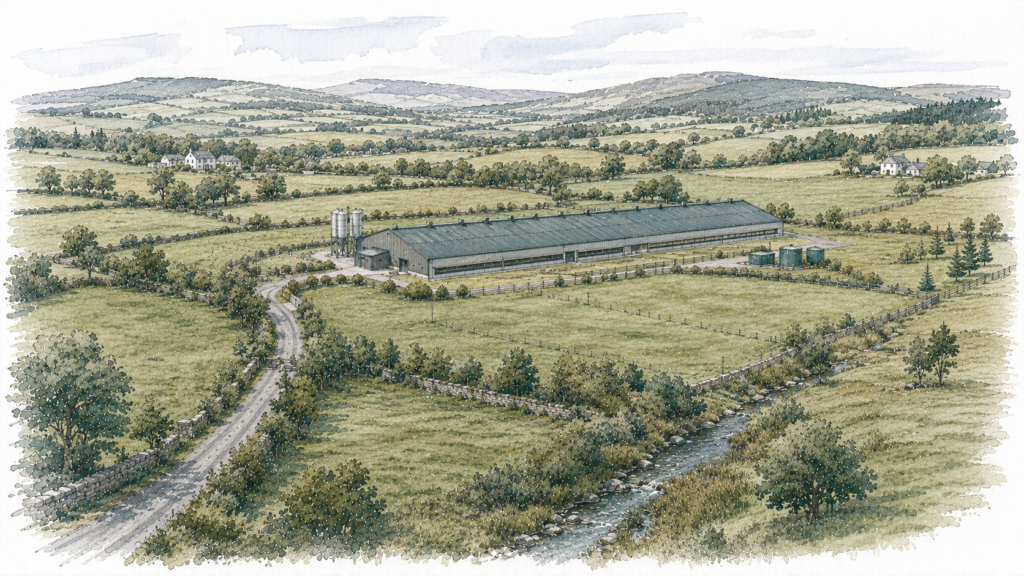
This case study explains how Planning Objections Scotland assisted in challenging a proposal for a substantial free-range poultry unit within the Scottish Borders Council area. The development was designed to accommodate a significant number of birds for free-range egg production, together with associated infrastructure and works.
Following consideration of the application and representations, the planning application was withdrawn in August 2026.
To protect client confidentiality, identifying details have been removed. However, the planning issues, methodology and outcome accurately reflect the work undertaken.
The Proposal
The application sought planning permission for the erection of a large poultry unit for free-range laying birds, together with associated works.
Although agricultural development is an established and necessary feature of the Scottish countryside, the scale and operational characteristics of this proposal meant that its planning implications required detailed consideration.
The development had the potential to introduce a substantial new agricultural building and associated activity into the rural landscape. Its operation also required consideration of vehicle movements, access arrangements, waste management, drainage and the potential effects of noise and odour upon surrounding properties and the wider environment.
Environmental considerations were particularly important given the potential relationship between intensive poultry operations, manure management, biodiversity and nearby watercourses.
The application therefore required careful assessment against National Planning Framework 4 (NPF4), the relevant Scottish Borders Local Development Plan policies and other material planning considerations relating to agricultural development, rural amenity, landscape, environmental protection and infrastructure.
Our client instructed Planning Objections Scotland to undertake an independent assessment of the application and determine whether the proposed development complied with the statutory planning framework.
Applying the P.O.S. Intervene Method
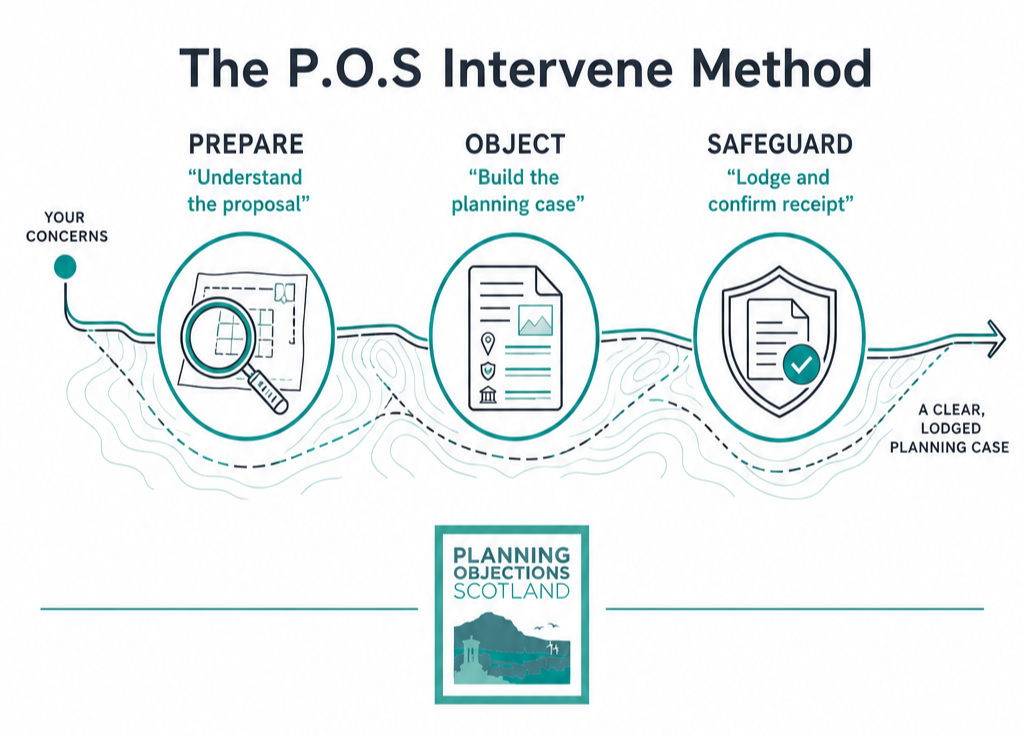
Every planning objection prepared by Planning Objections Scotland follows our P.O.S. Intervene Method—a structured process designed to ensure that every representation is evidence-led, policy-based and focused on material planning considerations rather than opinion.
Although every planning application raises different issues, our methodology provides a consistent framework for identifying the strongest planning arguments before they are presented to the planning authority.
Prepare
The commission began with a confidential discussion with our client to understand the proposal and identify the principal planning concerns.
Following agreement of the scope of work and fixed fee, we undertook a detailed review of the planning application, submitted information, site context and relevant national and local planning policies.
Particular attention was given to the scale and operational characteristics of the proposed poultry unit, its relationship with surrounding properties and the rural landscape, and the environmental consequences potentially associated with accommodating the poultry birds.
Access arrangements, vehicle movements, waste management, drainage, biosecurity and the potential for noise and odour were also considered as part of the initial assessment.
This review established the factual planning position before any planning conclusions were drawn.
Object
Having established the factual planning position, each concern was assessed against the statutory Development Plan and other relevant material planning considerations.
Rather than objecting to agricultural development or free-range egg production in principle, the representation focused upon whether a poultry development of this scale could be satisfactorily accommodated at this particular location.
The objection considered neighbouring amenity, noise and odour, landscape and visual effects, biodiversity, watercourses, waste management, access and infrastructure.
These matters were assessed against NPF4 and relevant Scottish Borders planning policies relating to rural development, environmental protection, landscape, design and sustainability.
Each issue was structured around recognised material planning considerations and supported by planning policy, evidence and professional planning judgement.
A draft report was provided to our client for review before being finalised and submitted.
Safeguard
Following client approval, the completed planning objection and supporting material were lodged with Scottish Borders Council.
Receipt was confirmed, ensuring that the representation formed part of the formal planning application record and could be considered during determination of the proposal.
As with every instruction, we remained available to consider amended plans, environmental information or other supporting documentation should the proposal change during the determination process.
The remainder of this case study explains how the P.O.S. Intervene Method was applied to this planning application.
Thorough Review of the Planning Application
Our review extended considerably beyond the appearance of the proposed poultry building.
The application was assessed within its wider operational and environmental context, including the consequences associated with accommodating poultry birds and the infrastructure required to support a development of this scale.
This included reviewing:
- the planning application and supporting information;
- the scale and operational characteristics of the poultry development;
- neighbouring residential and rural amenity;
- potential noise and odour impacts;
- landscape character and visual considerations;
- design and integration within the rural environment;
- biodiversity and environmental sensitivities;
- potential effects upon watercourses;
- waste and manure management;
- drainage considerations;
- access arrangements and vehicle movements;
- road and infrastructure capacity;
- biosecurity considerations;
- National Planning Framework 4;
- relevant Scottish Borders Local Development Plan policies; and
- other relevant material planning considerations.
Our assessment identified a number of issues requiring careful consideration before the planning authority could determine whether the development represented an acceptable form of agricultural development.
The scale of the poultry operation meant that potential impacts upon neighbouring amenity could not be considered solely by reference to the physical building. Noise, odour and operational activity formed part of the wider planning assessment.
Similarly, environmental considerations extended beyond the immediate development footprint. Waste and manure management, drainage and potential effects upon biodiversity and watercourses required consideration in the context of the proposed intensity of use.
The development’s relationship with the surrounding rural landscape and the ability of the existing access and road infrastructure to accommodate associated movements were also relevant.
Collectively, these matters required detailed scrutiny before the planning authority could conclude that a poultry operation of this scale could be satisfactorily accommodated.
Turning Concerns into Planning Arguments
One of the most important aspects of any planning objection is translating understandable concerns into planning arguments capable of influencing the planning process.
In this case, the objection extended beyond general opposition to the construction of additional houses.
Instead, the proposal was considered against National Planning Framework 4, relevant Scottish Borders Local Development Plan policies and other material planning considerations.
Particular attention was given to whether the development responded appropriately to established local character and whether its design and layout demonstrated the quality expected through the planning system.
The assessment considered the six qualities of successful places promoted through NPF4 and whether the proposed development would create a distinctive, pleasant and sustainable place that integrated successfully with its surroundings.
The potential intensity of development was considered alongside landscape and environmental sensitivities, allowing concerns about overdevelopment to be expressed through recognised planning principles rather than simply the number of houses proposed.
Road access and drainage were similarly considered as integral components of the proposal rather than secondary technical matters. New housing must be capable of being adequately serviced without creating unacceptable consequences for existing infrastructure or the surrounding environment.
Rather than presenting these issues individually, the objection demonstrated how design, density, character, landscape, infrastructure and environmental considerations collectively influenced the acceptability of the development.
This evidence-led approach ensured that Scottish Borders Council received a structured planning representation founded upon planning policy and material planning considerations rather than personal opposition to residential development.
The Outcome
Following consideration of the planning application and representations received, the application for the large free-range poultry unit was withdrawn in August 2026.
Unlike a refusal, withdrawal means that Scottish Borders Council did not proceed to issue a formal decision on the merits of the application. The reasons for withdrawing a planning application ultimately remain a matter for the applicant.
Nevertheless, the outcome meant that the poultry development, as submitted, did not proceed through the planning process.
While it would therefore be inappropriate to attribute the withdrawal solely to the objection, the case demonstrates the importance of identifying and presenting legitimate planning concerns at an early stage. The representation ensured that matters relating to neighbouring amenity, noise, odour, landscape, biodiversity, watercourses, waste management and infrastructure were clearly articulated within the planning process.
It also demonstrates why agricultural proposals can require extensive planning scrutiny despite their rural location. Support for agriculture and rural economic activity does not remove the requirement for development to demonstrate that its scale, location and operational effects can be satisfactorily accommodated.
The withdrawal provides another example of how a structured, evidence-led and policy-based planning objection can ensure legitimate concerns are formally recorded and properly presented during the planning process.
Could We Help You?
If you are concerned about a planning application affecting your property, rural community or surrounding environment, Planning Objections Scotland can provide an independent assessment of the proposal and prepare a professionally researched planning objection on your behalf.
Using our proven P.O.S. Intervene Method, we assess every planning application against the relevant national and local planning policies, identify the strongest material planning considerations and prepare evidence-led representations designed to assist planning authorities in reaching informed planning decisions.
Whether your concerns relate to a poultry unit, agricultural development, noise and odour, landscape impact, biodiversity, road access or another form of rural development, we can help ensure your concerns are presented clearly, professionally and effectively.
If you are concerned about a planning application within the Scottish Borders, contact Planning Objections Scotland to arrange a confidential review and discover how our professional planning objection service could help protect your interests.
 Confidential, no-obligation case review Reviewed by a professional planning consultant Know where you stand within 1 working day* Clear fixed fee before you decide to proceed Objection strategy based on planning policy — not emotion